
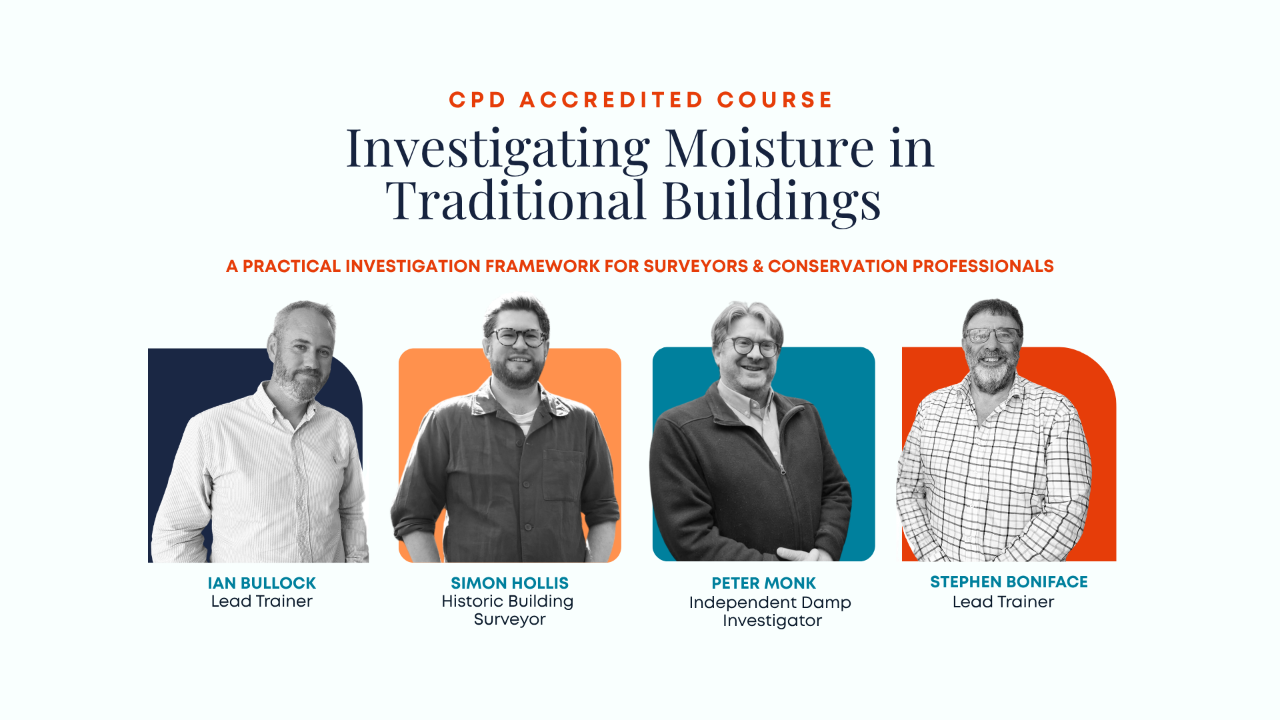
What You'll Learn in Module 2
You'll master advanced building pathology and the core fundamentals of moisture dynamics, learning how to track complex moisture pathways and isolate hidden defects with absolute clarity.
This module equips you to execute expert external and internal diagnostics, navigate both non-invasive and direct invasive forensics under the JPS 2022 framework, and move past the "beeping meter myth" using advanced technical probing. By combining on-site case studies with rigorous field workflows, you will develop the specialised professional judgement needed to deliver robust, defensive moisture reports that stand up to industry scrutiny.
Complete Course Curriculum
This comprehensive course provides an end-to-end mastery of advanced building pathology and moisture diagnostics. You will be guided through every critical stage across 6 core learning phases, tracking live properties from initial on-site inspection down to direct forensic sub-floor analysis and final reporting.
The Syllabus Breakdown
PHASE 01: Building Pathology & Moisture Dynamics
Establish the core foundations of building pathology, career journey milestones, legacy damp issues, and the critical minimum intervention philosophy.
-
Investigating Damp — Course Overview
-
Meet the Expert — Building Pathology & Career Journey with Simon Hollis
-
Building Pathology & Moisture Dynamics
-
Legacy Damp & the "Minimum Intervention" Approach
-
On-Site Briefing & Property Profile (Filey Street)
PHASE 02: External Inspections & Defect Mapping
Master the external diagnostic workflow: mapping wall defects, assessing render systems, analysing penetrations, and inspecting chimneys.
-
External Wall Inspections — Assessing Render
-
External Wall Inspections — Defect Mapping & Drainage Systems
-
External Wall Inspections — Wall Penetrations & Weathering
-
High-Level Inspections — Chimney Stacks, Flashings & Abutments
-
Investigating Altered Chimneys — Listed Buildings & Internal Flue Failure
-
Timber Window Inspections — Original Sashes, Decay & Timber Splicing
PHASE 03: The Historic Building Inspection Process
Establish your core inspection methodology, assemble the surveyor's toolkit, manage expectations, and isolate cellar structural defects safely.
-
The Historic Building Inspection Process
-
What’s in the Box? The Surveyor’s Toolkit
-
The Core Limitations — Managing Expectations
-
Moving from Suspicion to Investigation
-
Cellar Inspections & Below-Ground Defects
-
Structural Alterations & Active Timber Pests
-
Lesson Overview — Applying Best Practice During Residential Building Inspections
PHASE 04: Invasive Forensics & JPS 2022 Criteria
Step into direct invasive investigations under the JPS 2022 framework, assessing verge overhangs, sub-floor voids, and deep structural defects.
-
The Initial Consultation — Investigating Ben’s Property
-
Applying the JPS 2022 Framework to Damp Investigation
-
Exterior Building Pathology & Damp Investigations
-
Verge Overhangs & Water Shedding
-
Testing Airflow — Visual Confirmation of Sub-Floor Ventilation
-
Direct Boroscope Inspection of Sub-Floor Joists
PHASE 05: Damp Diagnostics & Technical Probing (Featuring Simon & Peter)
Bust the beeping meter myth, master thermal imaging, and leverage sub-floor timber hammer probes to analyse slate DPC paths.
-
Hidden Water Sources & High-Traffic Damp
-
The Beeping Meter Myth
-
Salts, Surface Moisture & Skirting Board Analysis
-
Using a Thermal Imaging Camera Effectively
-
Assessing Sub-Floor Timber Moisture with Hammer Probes
-
Forensic Indicators — The Rust Halo
-
Locating the Slate DPC & Identifying Joist Saturation
-
Module 2 Practical Task: Hands-on instrument calibration and data profiling exercise.
-
Module 2 Diagnostics Quiz: Testing your knowledge on moisture pathways and instrument readings.
PHASE 06: Professional Judgement & Moisture Reports
Transform forensic findings into JPS 2022 compliant moisture reports, trace high-level roofscape moisture paths, and navigate high ground levels.
-
Understanding Before Intervening — Practical Damp Surveying
-
The Roadmap to Resolution — Navigating Uncertainty
-
Case Study Conclusion — Presenting the Results to Ben
-
Using Roofscapes & High-Level Inspections to Trace Moisture Pathways
-
Managing High Ground Levels — Two Practical Case Studies
-
Professional Report Writing for Moisture & Timber Investigations